Featured Searches
- Immigrant Artist Mentoring Program
- NYFA/NYSCA Artist Fellowship
- The Profitable Artist Book
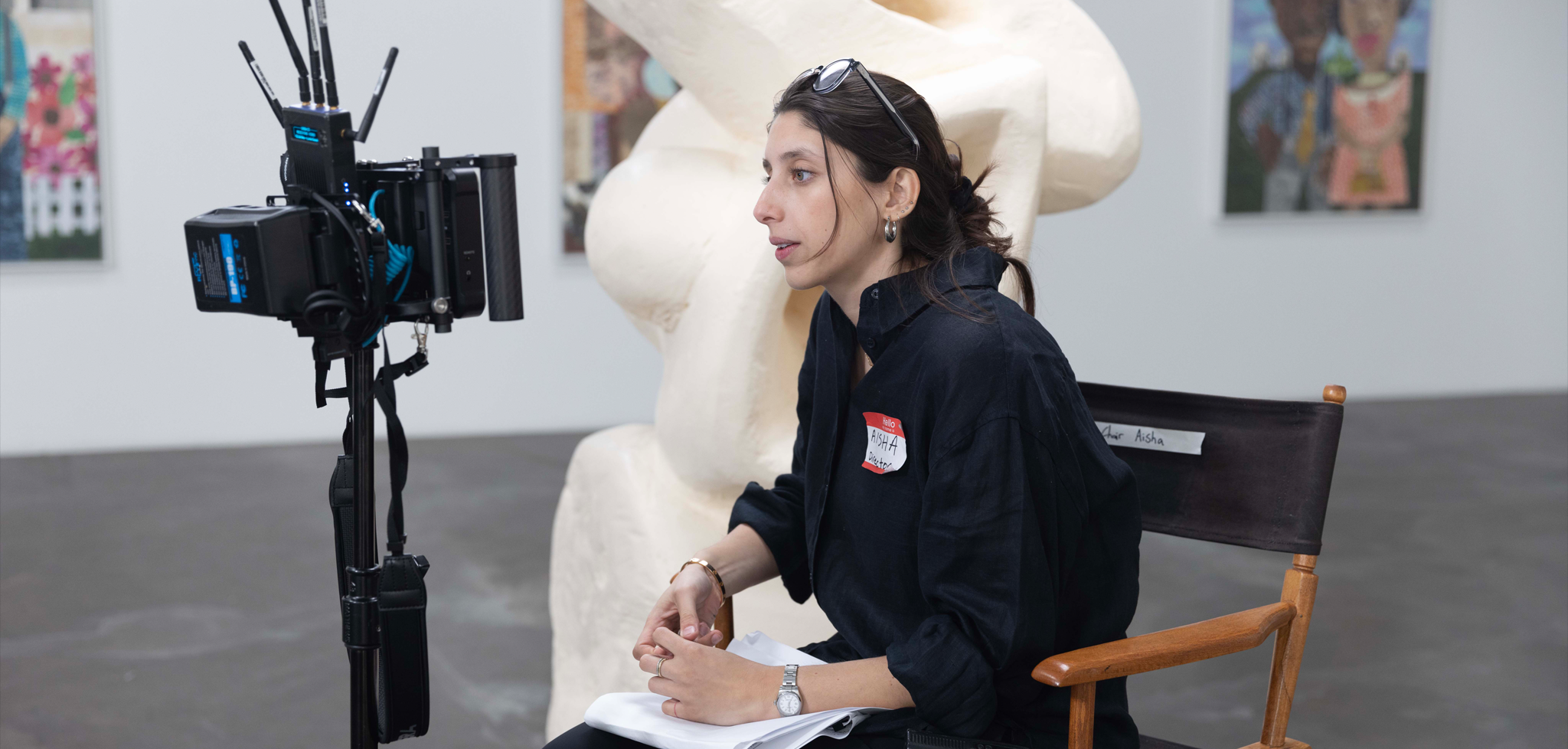
The Rauschenberg Medical Emergency Grants program provides one-time grants of up to $5,000 for recent unexpected medical, dental, and mental health emergencies to artists in financial need* who are creating work in the visual arts, digital/electronic arts, video/film, and choreography.
*To be eligible to apply, your average adjusted gross income for the last two years you’ve filed tax returns must be no greater than $80,000 ($160,000 for joint filers).
Please note:
This program and Rauschenberg Dancer Emergency Grants are made possible through the support of the Robert Rauschenberg Foundation. Robert Rauschenberg was committed to assisting fellow artists in need of emergency aid, ultimately establishing the nonprofit foundation Change, Inc. in 1970. In this spirit, this program is designed to serve artists in financial need who otherwise may delay critical treatment or incur substantial and perhaps overwhelming debt.
*Please note that the application form on Submittable will automatically close and stop accepting applications at this time.
The timeline for Cycle 37 is listed above. Cycle 37 is for emergencies occurring December 1, 2025 and later.
Cycle 38:
Application Opens: Tuesday, August 18, 10:00 AM ET
Application Closes: Tuesday, September 15, 5:00 PM ET*
Applicants Notified: November 9, 2026
For emergencies occurring February 1, 2026 and later.
Cycle 39:
Application Opens: Tuesday, October 20, 10:00 AM ET
Application Closes: Tuesday, November 17, 5:00 PM ET*
Applicants Notified: December 23, 2026
For emergencies occurring April 1, 2026 and later.
Cycles will continue on a recurring basis. Please check back on this page or sign up for our newsletter for updates.
There are three eligibility criteria in this program: Individual, Artistic, and Emergency. You need to meet all three areas, as of the cycle’s deadline, to apply.
Applicants must:
Applicants must be artists with a demonstrated commitment to the eligible artform(s). You need to create original work in at least one of the eligible disciplines, AND have recent and sustained artistic activity over the course of at least the last five years. If the work in the eligible discipline is tangential, incidental or infrequent, it is not eligible.
Recent and sustained artistic activity is defined as at least one opportunity annually over the past five years (2021 to present) for the public to experience your work in an eligible discipline or disciplines.
Eligible Events/Opportunities:
Ineligible Events/Opportunities:
Please Note:
Eligible Artistic Disciplines
Only artists creating work in Choreography, Digital/Electronic Arts, Video/Film, and Visual Arts may apply to this grant program. The applicant must be the primary maker of the creative work – the individual with final creative control.
Please review the definitions for the eligible disciplines:
This category accepts work where choreography, organized movement, or embodied performance is a central element. It welcomes work in all choreographic styles, including but not limited to: contemporary, modern, ballet, hip-hop and street styles, tap, traditional and cultural dance forms, circus, improvisation-based work, and multi-genre or interdisciplinary performances where movement is primary.
Choreography performed solely within an instructional/training setting; for competitions; or for music videos, TV, and commercial films is not eligible.
This category accepts work in which technology is an essential element of the work’s creation, presentation, or understanding. Examples include: works created or displayed on computers or other electronic media; work created with computer models such as sculptural works or algorithmic art; interactive installations including immersive virtual environments; internet projects; hypertext documents; other image, text, audio, or video works rooted in technology. This category also includes work that critically engages with artificial intelligence (AI).
This category accepts work in video or any work in which video or video techniques are pivotal, if not exclusive. Works initially shot on film cameras are also eligible, as well as filmed material that has been transferred to the computer for editing and processing.
Only the publicly named director and/or producer or credited co-maker are eligible; they must be the individual with the primary day-to-day responsibility for creating the work in its entirety. Performing artists in film/video or television/live performance, performing arts recorded digitally, and performances/writing distributed online are not eligible. Editors, cinematographers, assistant/line/field producers, television producers, screenwriters, television/film performers and crew members, dance performers, et al are not eligible.
Works which are intended for commercial or mass production, or are work-for-hire projects, are not eligible to be considered in the required artistic history. These include television shows, webcasts and podcasts, graphic and fashion design, commissions, and industrial films.
This category includes Craft/Sculpture, Painting, Photography, and Printmaking/Drawing/Book Arts.
In this program, an emergency is a one-time, unexpected, non-chronic condition as a result of illness, violence, an accident or triggering event, or sudden medical event, that requires treatment to ensure your health or life, and which without treatment has extreme impact on your daily life and ability to carry out/return to your creative practice. The only exceptions for chronic conditions are:
In each cycle, we can consider emergencies that have occurred within approximately the last six months. The earliest date for an eligible emergency is listed in the Cycle’s timeline information.
NEW: While eligible medical emergencies may occur anywhere in the world, the treatment is only eligible to be covered if it occurs within the U.S. (including D.C., Tribal Nations, and U.S. Territories), within two weeks of the incident/injury/onset.
Applications are open to artists in need who are creating original, independent work in the visual arts, digital/electronic arts, video/film, or choreography, who are seeking support for a medical, dental, or mental health-related emergency. Only generative artists—the creator of the original work—may apply.
When you fill out your application, you will need to provide the following information:
Funds may be requested for:
If you have not yet received a diagnosis or treatment because of lack of funding or the timing of this application, you may still apply.
If you haven’t yet received a diagnosis or treatment, and/or your documentation isn’t on hand, provide as much information about your condition as possible, including estimates of treatment costs in your local area, if possible.
If you receive a grant, you will be required to submit copies of paid bills/receipts which include documentation of treatment received for all funded expenses. You may also be required to submit a copy of your two most recently filed tax returns, demonstrating your adjusted gross income.
Eligible expenses include, but are not limited to, these out of pocket costs to the artist:
Ineligible expenses include, but are not limited to:
Artists who are otherwise eligible, but whose direct medical expenses are covered by Medicare/Medicaid, often struggle with covering living expenses while they are ill/injured/recovering and unable to work. These artists may apply for up to $5,000 in documented living expenses in lieu of medical expenses.
Eligible expenses:
Expenses must be documented via bills/invoices/receipts. Only expenses incurred during the documented treatment/recovery period are eligible.
Ineligible expenses:
In such cases, artists must submit documentation of Medicare/Medicaid coverage, a budget of requested expenses, and documentation of medical/dental/mental health emergency within the application form.
NYFA reserves the right to determine eligible and reasonable expenses to support through this grant program.
Funds go directly to the artist, not a medical provider, unless there is a specific reason to do otherwise, with pre-approval from NYFA. Grant awards are routinely paid via direct deposit.
NYFA regularly revisits its grant guidelines and eligibility requirements to improve clarity and accessibility and reduce unintentional bias. We invite feedback and suggestions that we can consider within the parameters of the program funder’s goals and NYFA’s required processes.
Due to the large number of qualified applications and the limited amount of funds, NYFA uses a two-step award process.
NYFA reserves the right to undertake additional steps to verify information prior to making grant awards and payments.
Please note, this is a very competitive program, and an application is not a guarantee of support.
We take the privacy of applicants and recipients seriously. The names of recipients of emergency grants are not published on our website or in our 990 or other financial documents. All reviewers sign confidentiality agreements, and the medical documentation and financial information such as tax returns is kept confidential and only seen by staff.
NYFA is committed to supporting artists from every background, and at all stages in their creative careers. We strongly encourage artists of color, LGBTQ+ artists, artists with disabilities, and artists living outside of the New York area to apply.
Submit your application
Applications must be in English (though they may be translated by someone other than the applicant) and can be completed by a proxy if needed.
All applications, including support materials, should be submitted online via Submittable.* First-time users will need to register with the free Submittable platform to access the application portal.
Applications submitted after the deadline will not be accepted and no exceptions will be made. We strongly recommend that applicants complete their applications in advance of the deadline to avoid potential technical problems.
Applicants will receive an automatic response from Submittable once their application has been successfully received.
*We understand that under certain conditions, it may be easier for an artist to submit a paper application, or receive assistance with an online application. Please contact [email protected] or 212-366-6900 ext. 239 to request assistance or an accommodation. We request that requests for accommodation be made as soon as possible, preferably two weeks prior to the deadline, to allow adequate time for staff to support you in submitting an application on time.
The NYFA Grants team hosted a live, virtual information session over Zoom designed to help applicants build a strong application. The one-hour session included an overview of the program, a summary of eligibility requirements, tips for filling out the application, and a live Q&A. Please view the recording, below.
For urgent questions, please contact Program Officer Mollie Quinlan-Hayes at [email protected] or 212-366-6900 (Ext. 239). Inquiries to the Robert Rauschenberg Foundation will be forwarded directly to [email protected].
ELIGIBILITY
Yes. If you have previously received a Rauschenberg Emergency Grant, you are eligible to receive another once five years have elapsed since your first award date.
If you have not been awarded funding in the past five years, and you still meet the eligibility criteria for a future cycle, you may re-apply.
Two things: Who is eligible, and what expenses can be requested. Both programs are for artists in need, and therefore have an income ceiling for eligibility. Please see each program’s guidelines for additional details.
Rauschenberg Dancer Emergency Grants are open to professional dancers in a dire financial emergency due to the artist’s loss or lack of current live performance work, because of circumstances outside of their control. Eligible applicants may request essential expenses such as housing, food, utilities, and medical care. Choreographers may not apply unless they also have recent and sustained activity as a professional dancer.
Rauschenberg Medical Emergency Grants are open to artists working in the visual arts, digital/electronic arts, video/film, and choreography. Eligible applicants may request funds for recent medical/dental/mental health emergencies. Dancers may not apply unless they also have recent and sustained activity as a choreographer.
The artist must be the sole or primary creator of the artwork, and have full and final artistic control. If you assist the primary creator, or if you interpret another artist’s work such as a dancer performing a choreographer’s work, you are not eligible.
Recent and sustained artistic activity is defined as at least one opportunity annually over the past five years (2021 to present) for the public to experience your work in an eligible discipline or disciplines. You must list multiple opportunities for the public to experience your work in your resume/bio/CV, including the year, location (city or town and venue), and title.
Eligible events/opportunities:
Ineligible events/opportunities:
Please note:
This program is intended for artists who work consistently and regularly in one or more of the eligible artforms, not those whose work in an eligible artform is tangential or incidental or infrequent. For example, a theater director who created movement for one or two productions as part of their direction would not be considered a choreographer.
You may apply if you work in multiple disciplines, as long as you have sustained public-facing activity in one or more of this program’s designated disciplines over at least the last five years (2021-present).
Clearly indicate on your resume that you were the choreographer, dancer, or both for each credit.
We can only consider work that is self-standing within the designated disciplines.
Recognizing the lengthy production process of many independent film/video projects, we will consider production activity within the required recent artistic history, although public screenings/showings of the artist’s work must also have taken place.
None. These applications are reviewed for Demonstrated Need only, so no work samples and portfolios are necessary.
No, please feel free to submit your full resume. One, because we don’t want you to have to create a new resume for this application; and two, because seeing your complete artistic history is helpful contextual information. However, if you do want to submit just the last five years’ activity, be sure that it runs from 2021 to the present.
Yes, this program is only open to artists in financial need, with an averaged adjusted gross income (from your two most recent federal tax returns) of $80,000 or less; $160,000 or less if you file jointly.
WHAT CONSTITUTES AN EMERGENCY & EMERGENCY EXPENSES
A one-time, unexpected, non-chronic condition as a result of illness, violence, an accident or triggering event, or sudden medical event, that requires treatment to ensure your health or life, and which without treatment has extreme impact on your daily life and ability to carry out/return to your creative practice.
No, funds can only be used for a one-time, unexpected health-related condition. We do not cover expenses for treatment, prescriptions, or other expenses related to a chronic condition. Extenuating circumstances which cause an unexpected and severe worsening of the condition may be considered at the discretion of the panel. Example: A recent traumatic incident triggered a flareup of an existing mental health condition.
If you have recently been diagnosed with a condition which requires long-term treatment, such as cancer or multiple sclerosis, you may apply for the expenses of your initial exams/diagnosis, any emergency surgery, and other urgently-needed treatment to stabilize your condition.
Grant funds can be requested for expenses directly related to the emergency for up to 12 months following the date it occurred (a series of treatments to resolve the problem, physical therapy, etc.).
Submit what you have, and we encourage you to estimate the highest likely amount up to the maximum of $5,000. If you receive a grant, you will ultimately only receive funding in the amount of your documented costs.
A PDF of no more than 15 pages providing as much specific information as possible about your diagnosis/condition, and your out-of-pocket expenses. Your PDF attachment(s) can include:
Do not submit images such as detailed lab reports, photos, or x-rays.
Provide information on the primary condition/diagnosis and the expense. Staff will reach out to you for more information if your application moves forward in the panel process.
Artists who are otherwise eligible, but whose direct medical expenses are covered by Medicare/Medicaid, often struggle with covering living expenses while they are ill/injured/recovering and unable to work. These artists may apply for up to $5,000 in documented living expenses in lieu of medical expenses.
Eligible expenses:
Expenses must be documented via bills/invoices/receipts. Only expenses incurred during the documented treatment/recovery period are eligible.
Ineligible expenses:
In such cases, artists must submit documentation of Medicare/Medicaid coverage, a budget of requested expenses, and documentation of medical/dental/mental health emergency within the application form.
Our deadlines are firm. If the only item you are missing is the medical documentation, and you expect to receive it shortly, go ahead and apply. If your application moves to the next stage of the process, staff will reach out to you for material. Otherwise, plan to apply in the next cycle if your emergency occurred during the eligible time window.
We recommend that in selecting which emergency to apply for, you consider which:
If all other requirements are met, you may apply for expenses related to both.
Yes, you may request funds for expenses you have already paid and/or expenses not yet paid or incurred.
Yes, if it is prescribed by a medical professional, limited in scope and is vital to recovery from the emergency cited.
Yes, if they are prescribed by a medical professional and are vital to recovery from the emergency cited and not ongoing in nature.
Yes, if it is prescribed by a medical professional and is vital to recovery from the emergency cited and not ongoing in nature.
Yes, if this is appropriate for your condition. Online providers must be based in the U.S.
No, these are generally not eligible expenses.
Yes, if it is prescribed by a medical professional and is vital to recovery from the emergency cited and not ongoing in nature.
If you can demonstrate your condition is at a point where treatment is urgently necessary to protect your life or health, you can apply. For example:
Elective or pre-planned treatment is not eligible.
This program can only accept applications for the emergency medical expenses of the artist themselves.
Only artists who are otherwise eligible, but whose direct medical expenses are covered by Medicare/Medicaid, may request funds for living expenses while they are ill/injured/recovering and unable to work. These artists may apply for up to $5,000 in documented living expenses in lieu of medical expenses.
Eligible expenses:
Expenses must be documented via bills/invoices/receipts. Only expenses incurred during the documented treatment/recovery period are eligible.
Ineligible expenses:
In such cases, artists must submit documentation of Medicare/Medicaid coverage, a budget of requested expenses, and documentation of medical/dental/mental health emergency within the application form.
For all other applicants, only out-of-pocket emergency medical expenses are eligible.
No, the fund only covers medical, dental, or mental health expenses, no other damages or loss of property.
No.
No, funds can only be used for medical emergencies as outlined above. Please refer to NYFA’s website for other kinds of emergency or financial support.
AWARD AMOUNTS & DISPERSAL
No. Available funds are limited and the demand for emergency funding is high.
Yes, you may ask for any amount up to $5,000.
Our support is to help grantees to recover and return to their creative practice. Therefore, grants are generally awarded at the maximum amount of eligible expenses, up to $5,000 (sometimes these are less than the actual requested amount). NYFA reserves the right to determine eligible and reasonable expenses to support through this grant program.
We anticipate notifying applicants of their status within seven weeks of the application deadline. For those receiving grants, additional documentation is required, and payment processing can take a minimum of up to 30 business days after all paperwork is submitted. These processing times are subject to change.
All eligible applications are reviewed at the same time by the panel, so there is no advantage to applying quickly or early. We recommend you take your time to submit a strong and complete application by the deadline.
Yes. If you are awarded a grant, you will need to provide copies of bills/receipts/invoices from the care provider which include documentation of treatment received for the emergency expenses described in your application. Documentation must include:
We classify these as emergency grants, and you will not receive a 1099 for these funds.
Grant funds are only sent to the artist, not a medical provider, unless there is a specific reason to do otherwise, with pre-approval from NYFA. Grant awards are routinely paid via direct deposit.
A pool of funds is allocated for each cycle. Cycles will occur bi-monthly through at least June 2026. If you are an unsuccessful applicant, and continue to meet eligibility requirements (including the date of your emergency), you may reapply with a new application in a future cycle.
To receive your grant, you will need to sign a Letter of Agreement and provide other formal documentation including copies of your medical bills/invoices and your government-issued ID. NYFA reserves the right to undertake additional steps to verify information prior to making grant awards and payments.
HOW TO APPLY
Yes. We understand that certain medical conditions may make it necessary for a proxy to complete the application, but the funds will only be released to the artist who has experienced the emergency.
We do accept applications completed and submitted by a proxy; if the grant is awarded, the artist themself will need to legally accept the grant.
Applicants must certify that they have read and met the eligibility requirements stated in the Rauschenberg Emergency Grant guidelines and that all information provided in this application is true and correct to the best of their knowledge. They must further acknowledge that the New York Foundation for the Arts is not liable for damage or loss of materials submitted. At any time, if NYFA determines that an application is false, misleading, improperly submitted, or fails to further the Rauschenberg Emergency Grant Program objectives, NYFA may, at its sole discretion, suspend or demand the return of funds. Applicants agree not to sue the New York Foundation for the Arts if NYFA suspends payment or demands repayment.
Yes. We understand that under certain conditions, it may be easier for an artist to submit a paper application. If this is of interest, please email [email protected] or call 212- 366-6900 ext. 239 to speak with the program coordinator.
If you have MS Office, and you have the files as Word, you should have Adobe Acrobat on your computer or you can download it for free, and you can save the doc or an email from your provider as an Adobe pdf file.
For medical documentation, the best choice is to scan up to 15 pages and have them saved as one PDF. If you don’t have a scanner, if you have a friend or relative close by with a scanner, or can get to a FedEx-type shop, that’s best. If not, you can contact the program coordinator at [email protected] to make arrangements.
Yes. To save your application as a draft, scroll to the bottom of your working application and select “Save Draft.” Sign in to your submittable account to view your draft applications. You can’t also sign in via the direct link to saved drafts here.
We highly suggest using a laptop or desktop computer to complete your application on the platform, rather than a mobile device or tablet. Free access to these types of computers are available at most public library branches, including those throughout New York City. For a smoother performance, we recommend using either Firefox or Chrome as your browser. If you’re already using Chrome, please clear the browser cache and cookies. Additionally, please make sure you are using the most up to date version of your browser.
If you are still running into technical issues, you can reach out to Submittable’s Support team directly via the contact form, Submitter Support, or via the support email address [email protected] so that they can troubleshoot directly.
To preview your submitted application, please sign in to your Submittable account. If you continue having issues viewing your submission, please reach out to [email protected] for further assistance.
Note: Submitted applications should only be previewed using the link above; you may not be able to preview your submitted application by signing in through the same portal link you used to apply.
By completing this information you are helping NYFA secure future funding, collect general information about our audience, and properly assess our effectiveness in serving the creative community. Your responses will remain anonymous and any personally identifying data will be removed prior to sharing the demographic data with third parties.
NYFA is committed to supporting individuals from all backgrounds and disciplines and will continue to work towards values of equity, diversity, inclusion, and accessibility across all programs.
Any questions?