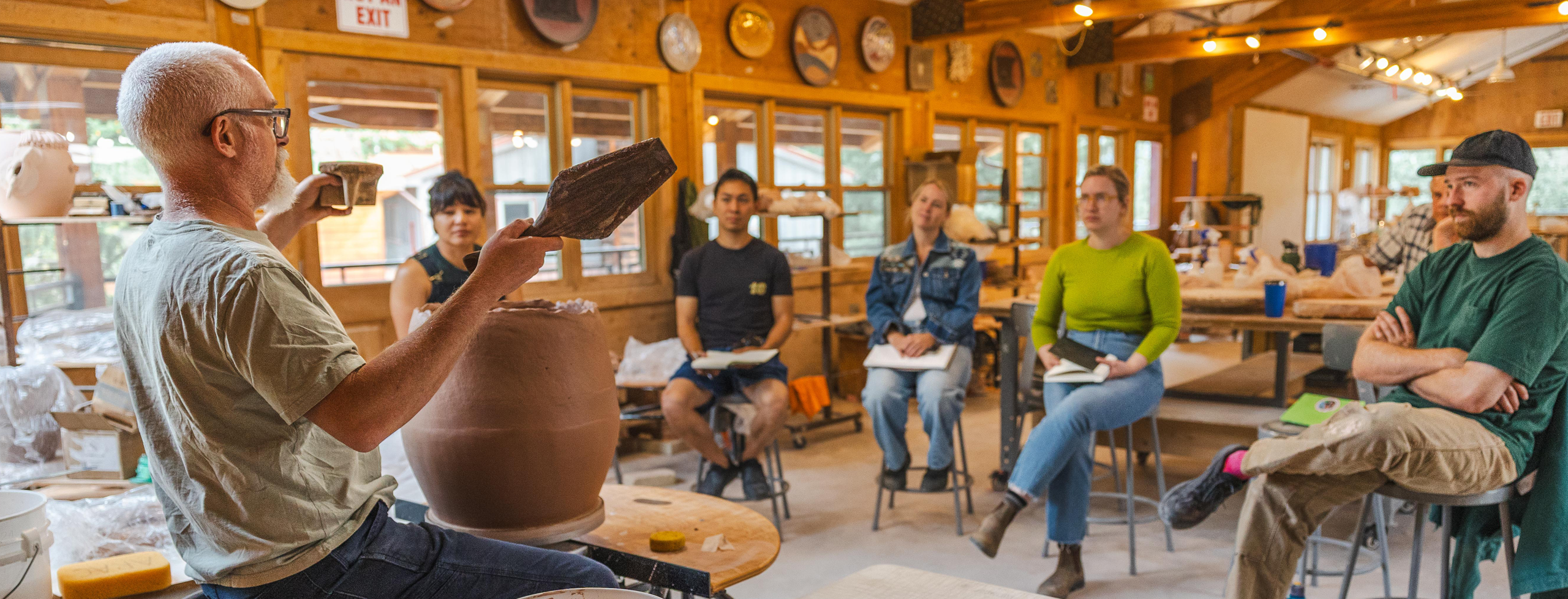
How Craft Artists Are Creating Today
Representatives from five prestigious craft organizations fill us in on what they’re seeing.
In this article, we’re checking in with residency programs and craft organizations nationwide to ask: What is the state of craft as a field today? In what new ways are craft artists creating using both traditional methods and new technologies?
Read on for insights from:
- Betsy Alwin, Artistic Director of Ceramics and Expanded Media, Anderson Ranch Art Center
- Marilyn Zapf, Senior Director of Programs and Curator, Center for Craft
- Perry Price, Executive Director; Anna Lehner, Programs and Studio Director; and James Rutter, Technology Director; Haystack Mountain School of Crafts
- Robin Dreyer, Communications, Penland School of Craft
- Kristin Muller, Executive Director, Peters Valley School of Craft
Then, be sure to check Part 1 of this series for an overview of each organization and current/upcoming opportunities!
How would you describe the state of craft as a field today? Is there anything about the field or your programs that might surprise someone not familiar with craft as a form of art?
Betsy Alwin, Anderson Ranch Art Center: It is broadly accepted that craft has merged with conceptualism as modes of expression, and the historic lines between craft and high art have blurred. The role of material and process in the conceptual development of a work of art marks inclusivity and openness. There is a movement to use our hands more, and traditional techniques can be more accessible to people who don’t have a lot of resources or tools for creation.
Our programs focus on teaching and sharing craft processes, merging these with discussions about how tactility, experience, and tradition close the gap between life and art. Our programming offers a range of access to traditional, contemporary, and innovative techniques and ideas. In certain areas, beginners and advanced artists might attend the same workshop because the topic of the class is so unique and specialized, but not complicated.
Marilyn Zapf, Center for Craft: Craft is having a moment culturally as scholarship has advanced to document its diverse histories and center its role in conversations about art, design, and other fields. Mainstream attention has followed, with popular streaming shows, exhibitions, and workshop spaces popping up across the country. It does not seem to be a coincidence that as screens continue to rule more of our daily lives, people are hungry for the connection, focus, and creativity that comes from making things—both for function and for beauty—as a reminder of our humanity.
What can surprise people about craft is how adaptive it is and how forward looking it can be. The Center for Craft supports artists experimenting with all kinds of materials—from those traditionally associated with craft being used in new ways, thanks to digital tools and technologies, to bio-based alternatives that create opportunities for reducing waste streams and minimizing energy impacts. It’s an exciting time for craft and a reminder that craft is always relevant.
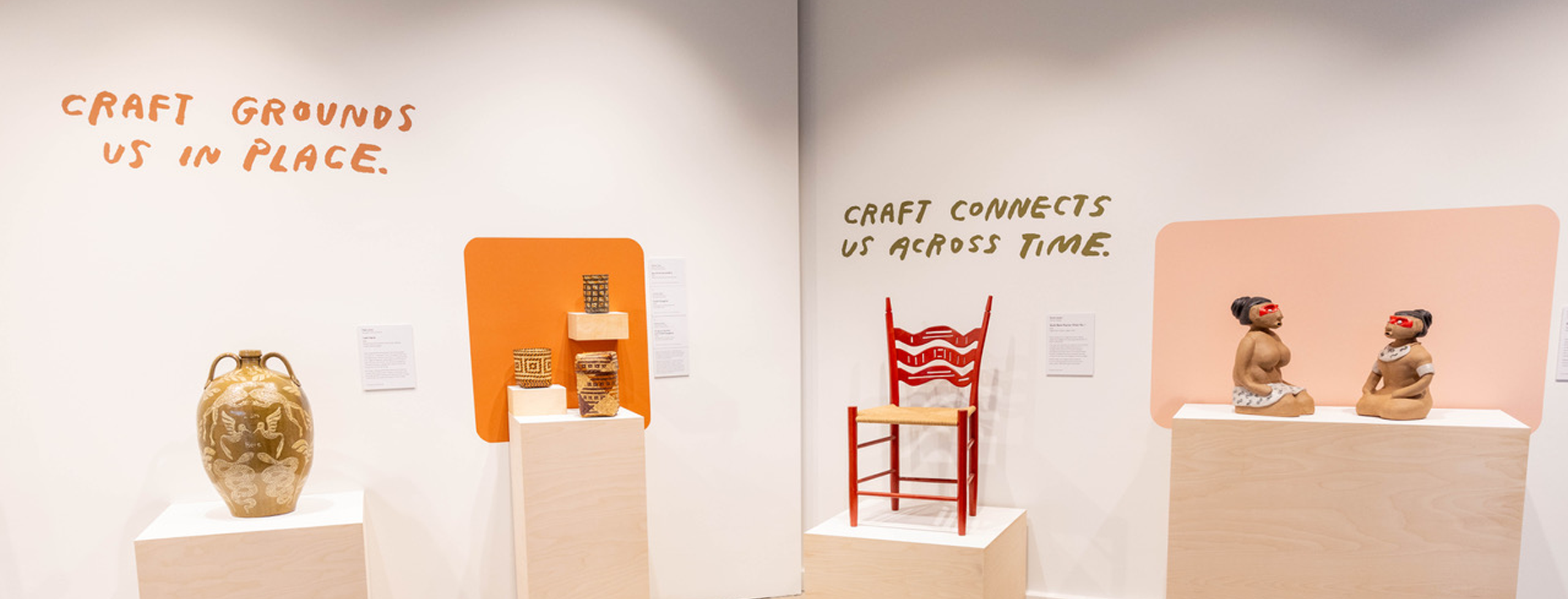
Perry Price, Haystack Mountain School of Crafts: Craft has always run alongside other forms of visual arts, and from time to time, the larger field of contemporary art turns to the crafts for innovation in process, in materials, or in perspective. But one might be surprised to learn that the concepts, ideas, and concerns of practicing artists have longer and deeper legacies within the field of craft than acknowledged, often with surprising results.
Robin Dreyer, Penland School of Craft: Craft is lively, vibrant, and making a visible contribution to our culture. The work of prominent artists such as Nick Cave, Martin Puryear, and Liza Lou shows strong connections to craft (Cave has been an instructor at Penland and Puryear has been a visiting artist). Craft media and skills are attracting new interest as a respite from digital technology and constantly-online lives. And there are still many people making a living creating handmade work in their studios.
Some of the artists we know as Penland instructors are working to preserve traditions; many are pushing materials and skills into new forms and areas of expression. More than a few are doing both of these things at the same time. Some people express surprise to see drawing, painting, photography, printmaking, and sculpture included in Penland’s programs. Although these media are frequently classed as “fine art,” Penland School sees craft as a big tent that embraces and celebrates skilled making of all kinds. We are happy to put a beautifully-made ceramic bowl on an aesthetic continuum with a piece of challenging sculpture.
Kristin Muller, Peters Valley School of Craft: The field of craft today is remarkably dynamic, expansive, and interdisciplinary. Far from being limited to traditional notions of “handmade objects” or hobby-based practices, contemporary craft exists at the intersection of fine art, design, cultural preservation, material research, social practice, and innovation. Artists working in clay, fiber, wood, metal, glass, printmaking, and other craft disciplines are engaging deeply with issues such as identity, labor, sustainability, technology, migration, community, and environmental stewardship.
One of the most exciting aspects of the field is that craft is increasingly recognized not only for technical mastery, but also for its conceptual and cultural relevance. Museums, galleries, universities, and collectors are paying greater attention to craft artists whose work challenges distinctions between art, design, and utility. At the same time, there is renewed appreciation for material knowledge, slow processes, and hand skills in a culture dominated by speed and digital production.
Something that often surprises people unfamiliar with craft is the breadth and sophistication of contemporary craft programs and communities. Many assume craft education is primarily recreational, but in reality the field supports rigorous artistic practice, professional careers, research, entrepreneurship, and cultural exchange. Craft schools and residency programs often function as vibrant interdisciplinary hubs where emerging artists, established makers, hobbyists, designers, and curious learners work side-by-side. These environments foster mentorship, experimentation, and collaboration across generations and disciplines in ways that are increasingly rare elsewhere.
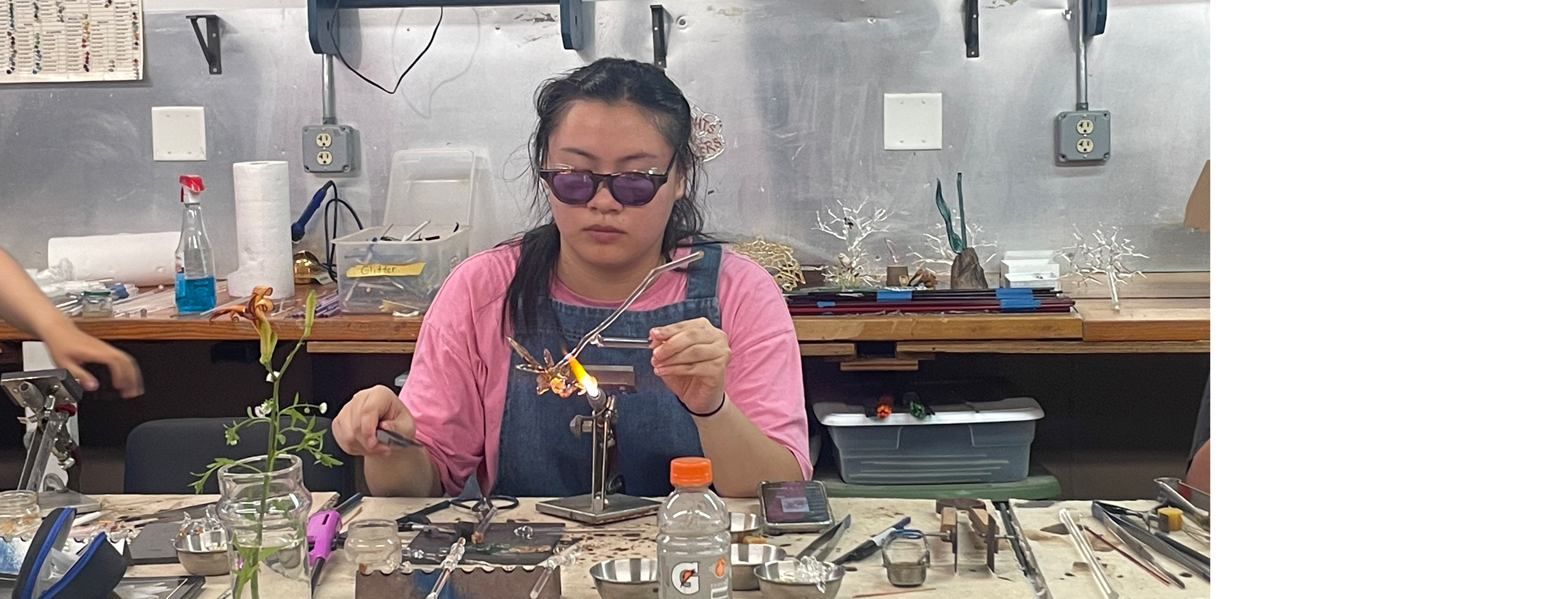
Have you seen new technologies affect how artists think about creating? Is there a desire to embrace or reject technologies within traditions?
Betsy Alwin, Anderson Ranch Art Center: Many folks ask if I think that digital clay printing is going to “take over.” My response is based on what I’ve observed here at the Ranch over and over in different workshops. Digital processes are exceptional tools for working quickly through ideas. They assist in creating prototypes for project development, and they can be an integral part of a finished work. The common misconception is that digital processes are “one and done.” Folks who take workshops here are often surprised by the amount of post-production work needed after something is digitally created. Digital processes often enhance the hand-made experience as they cannot take the place of the hand. The hand’s energy is very different than that of a digitally rendered image or 3D printed object. New technologies do make it possible to create faster than in the past. The more people embrace them, the more handicrafts are developed. Digitally created work has its own expression and conceptual meaning that it can conjure if that is what the artist intends.
Marilyn Zapf, Center for Craft: Makers have always been innovators, stewarding deep material and process knowledge while adapting to changing cultural and technological conditions. What feels especially important today is expanding access to materials knowledge and technologies that have often been siloed within higher education or industry.
That is part of why the Center for Craft is developing a publicly-accessible Materials Collection and supporting fellowships focused on biomaterials research. We see makers as essential contributors to conversations about sustainability and material innovation because they bring generations of embodied knowledge about how materials behave and carry cultural meaning.
At the same time, makers are discerning about technology. Many embrace it as a way to document and share traditional knowledge, while also being intentional about when technology enhances a process and when handwork or inherited techniques remain essential. Rather than simply embracing or rejecting technology, makers are actively negotiating the relationship between innovation, tradition, and cultural continuity.
Perry Price, Haystack Mountain School of Crafts: Craft is a discipline grounded in material and technique, and consequently maintains and preserves traditional processes and ways of making. But new technologies are just new tools; new materials are just new media—craft artists are frequently on the leading edge, exploring new means of creating from a foundation of deep material and technical knowledge.
Anna Lehner, Haystack Mountain School of Crafts: There is a push and pull between utilizing new and old technologies in craft. For example, we see processes in our programming at Haystack this year that combine digital design and sculpture in Vivian Beer and Hannah Vaughan’s workshop, “Scrappy Innovation + the Infinitely Scalable.” We also see a huge draw to processes that employ age-old woodworking tool technology, like Aspen Golann’s workshop, “Folk Futures: Greenwood Chairmaking.”
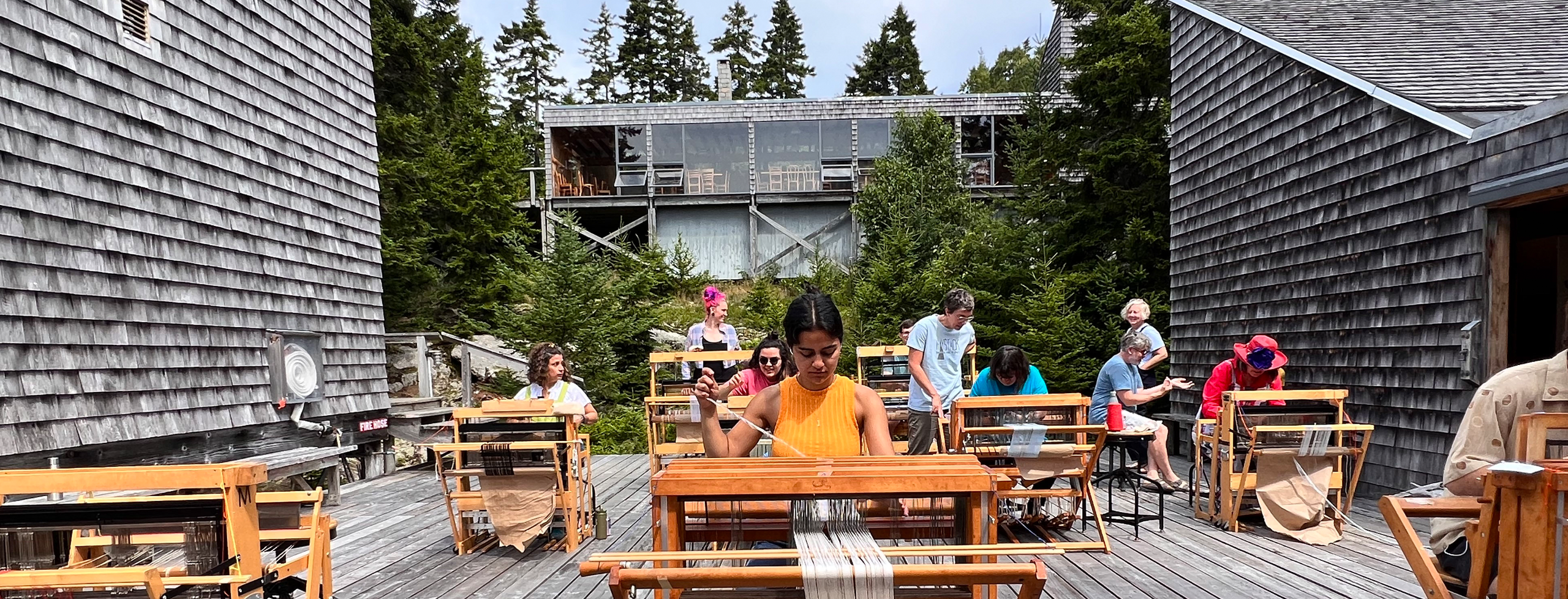
James Rutter, Haystack Mountain School of Crafts: Haystack’s Fab Lab is domain/discipline agnostic and usually sits outside traditions, often at the edge of established processes, exploring new ways of thinking and making. That said: yes, technology absolutely changes how artists think about creating. The artists who do this well understand both the role and the limitations of modern tools and know when and where each one belongs in their practice.
From my vantage point, I see digital fabrication technologies serve craft in three common ways:
1. As an accessibility extension. The technology functions as an extension of the artist’s body, allowing them to cut, carve, or manipulate materials in ways their hands alone cannot. Hand carving requires a level of physical capacity that may put a project out of reach; robotic cutting machines shift some of that work away from the artist’s body. The same applies to scale — both very large and very small — where the work exceeds what’s humanly possible.
2. As a means to an end. This is the most common use case, and the one I find most worth highlighting for artists who haven’t yet encountered these technologies or who see them at odds with their tradition. Here, digital fabrication is one stop along the way; the end product often bears no visible trace of a digital or robotic tool. Artists use the Fab Lab to make machining jigs, templates, molds, stencils, and fixtures — none of which appear in the finished piece, but all of which are essential to the journey of making it.
3. As a direct part of the final object. Laser-cut wood inlays are set into a larger piece; CNC-carved components assembled into a more complex form. Here, the technology is visibly present in the artist’s hand on the final work.
The goal, in my view, isn’t to replace the artist with a machine. It’s to augment them—to enable new forms of expression, and to make the act of making more accessible to people whose bodies, geographies, or material access might otherwise close those doors.
Robin Dreyer, Penland School of Craft: Our workshops have included a number of intersections between digital technology and hand work. CNC routers and plasma cutters have been used to cut wood or steel components that are assembled and finished by hand. Students have cut their designs into woodblocks with a laser engraver and then printed those on antique letterpresses. Jewelry forms have been 3-D printed, sometimes altered with hand tools, then cast in metal and hand finished.
There are definitely people who reject these developments, but most of our students are curious and enthusiastic even if they are not personally interested in these developments. Haystack, one of our sister schools, has a dedicated Fab Lab staffed by expert operators who assist students working in different materials with all sorts of crossover projects.
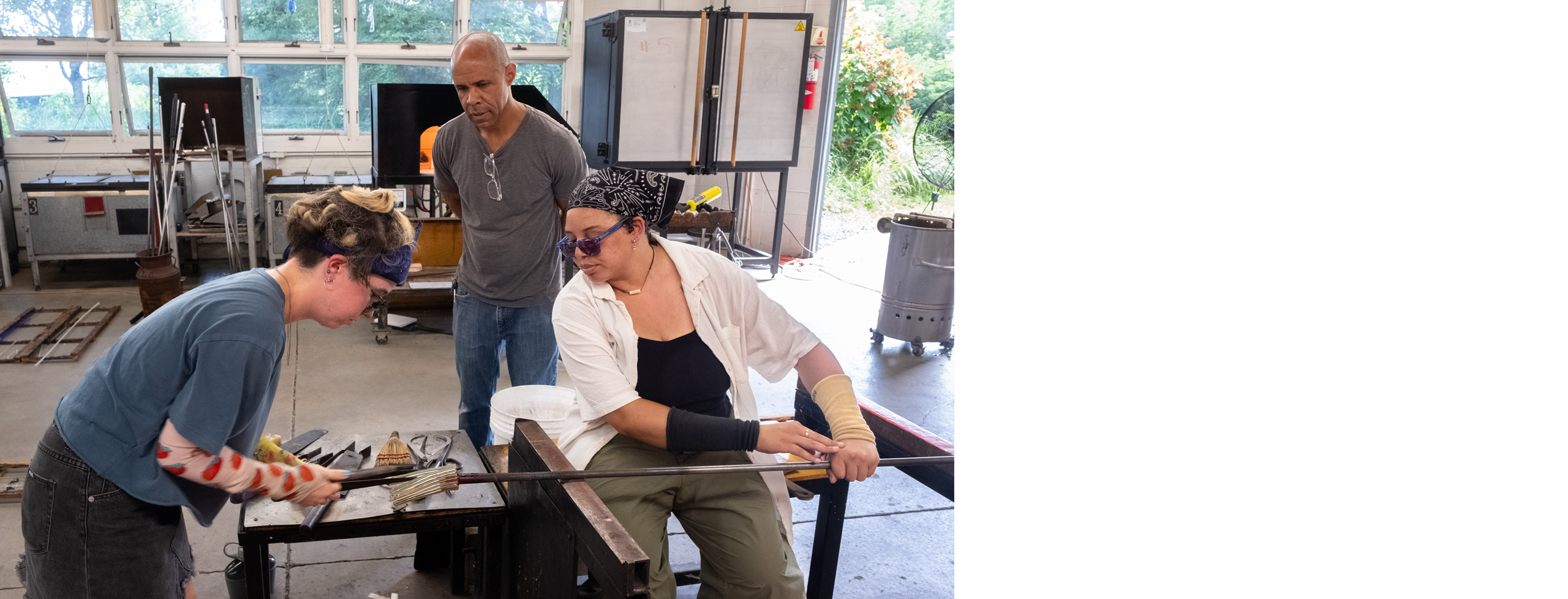
Kristin Muller, Peters Valley School of Craft: New technologies have significantly expanded how artists think about creation, process, authorship, and audience engagement across the craft field and the broader arts landscape.
The relationship between craft traditions and technology is rarely a simple embrace-or-reject divide. It is usually a thoughtful negotiation about values: what should be preserved, what can evolve, and what might be lost or gained through innovation. For some artists and tradition bearers, there is a strong desire to protect techniques that depend on embodied knowledge, hand skill, slowness, and direct material engagement. Certain processes carry cultural histories and generations of accumulated wisdom that cannot easily be replicated through automation. In these cases, resistance to technology is not necessarily nostalgia; it can be an intentional defense of labor, heritage, ritual, and human presence in the work.
At the same time, many artists within traditional disciplines actively embrace new technologies as tools for adaptation and survival. Digital communication has allowed craft communities to hare knowledge globally, archive endangered techniques, and reach new audiences. Technologies like laser cutting, digital weaving, CAD modeling, or 3D printing are sometimes incorporated not to replace tradition, but to expand what is possible within it. A ceramic artist may use 3D modeling software to prototype forms before hand-building them. A fiber artist might combine traditional weaving with digital jacquard technology.
Technology has not replaced traditional making as many once predicted; instead, it has complicated and enriched it.
Find more opportunities in the arts by visiting our Opportunities Board. Interested in listing a craft job or opportunity with us? Get details and sign up to post here or contact Leah Rosenfeld for questions at [email protected].